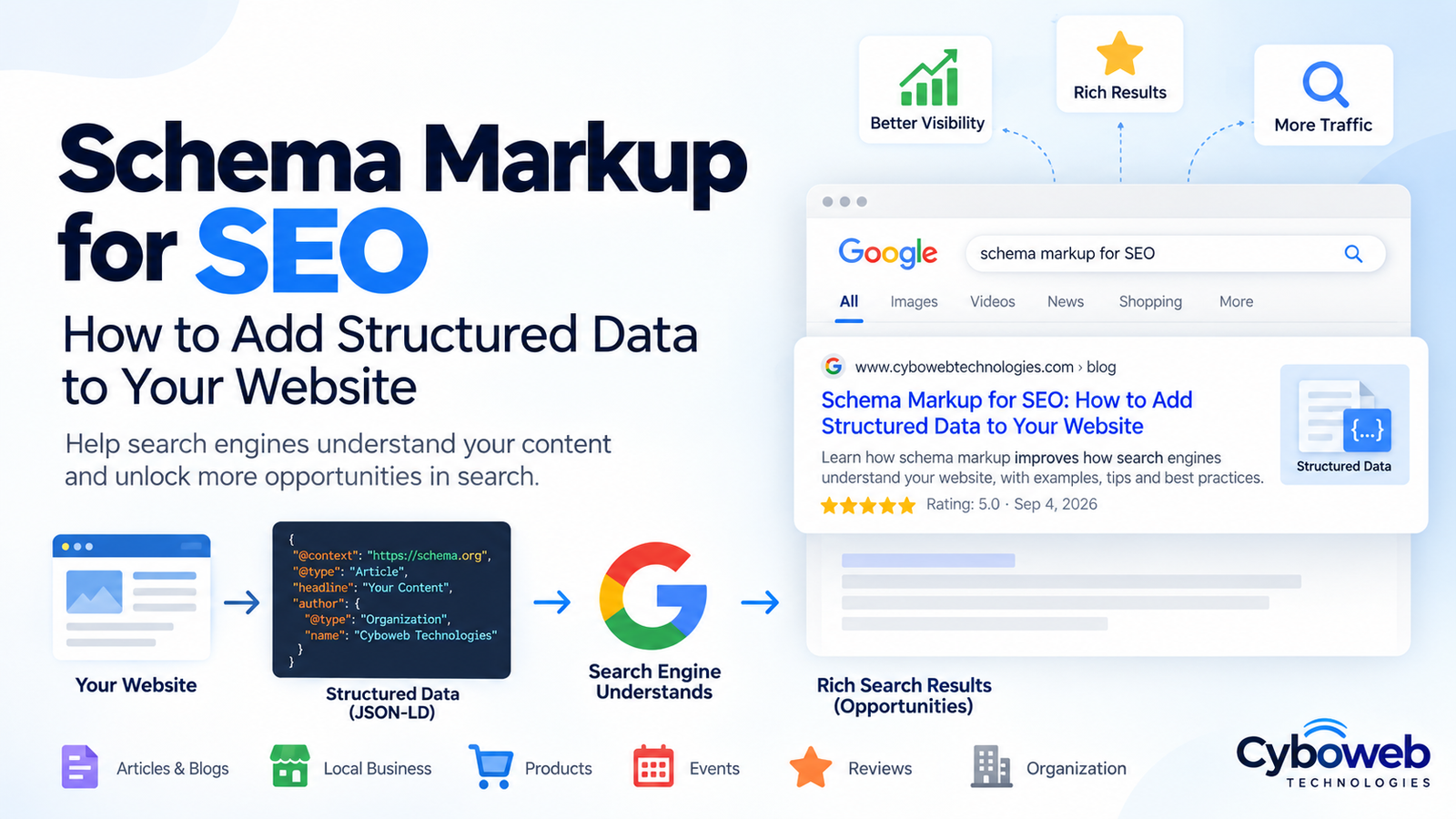

Search engines read text well but infer meaning imperfectly. Structured data states explicitly that a number is a price, a string is an author and a date is a publication date, making a page eligible for richer presentation.
Use JSON-LD
JSON-LD sits in a script tag, separate from your markup, so it survives template changes and is far easier to generate and validate than inline attributes.
Types worth implementing first
- Organization, once, with your name, logo and contact details
- BreadcrumbList on every page with a hierarchy
- Article on posts, with author and dates
- Product with price and availability where applicable
- FAQPage only where genuine questions and answers appear
Accuracy is not optional
Structured data must match what a visitor sees. Marking up prices or ratings that do not appear on the page is a policy violation and risks losing rich results entirely.
Validate and keep validating
Test with the official validators after every template change. Structured data breaks silently: nothing on the page looks wrong, the eligibility simply disappears.
Structured data makes you eligible for rich results. It does not entitle you to them, and inaccurate markup can remove the eligibility altogether.
Where to start
Add Organization and BreadcrumbList first. They apply site-wide, are simple to generate, and rarely need revisiting.