
What it manages
A gaming centre is several businesses running in one room: a ticket gate, an arcade floor, a café and a staff roster. Run them on separate registers and the day never reconciles — the cash drawer disagrees with the ticket count, nobody knows which machine actually earns its floor space, and free play given to a friend is invisible.
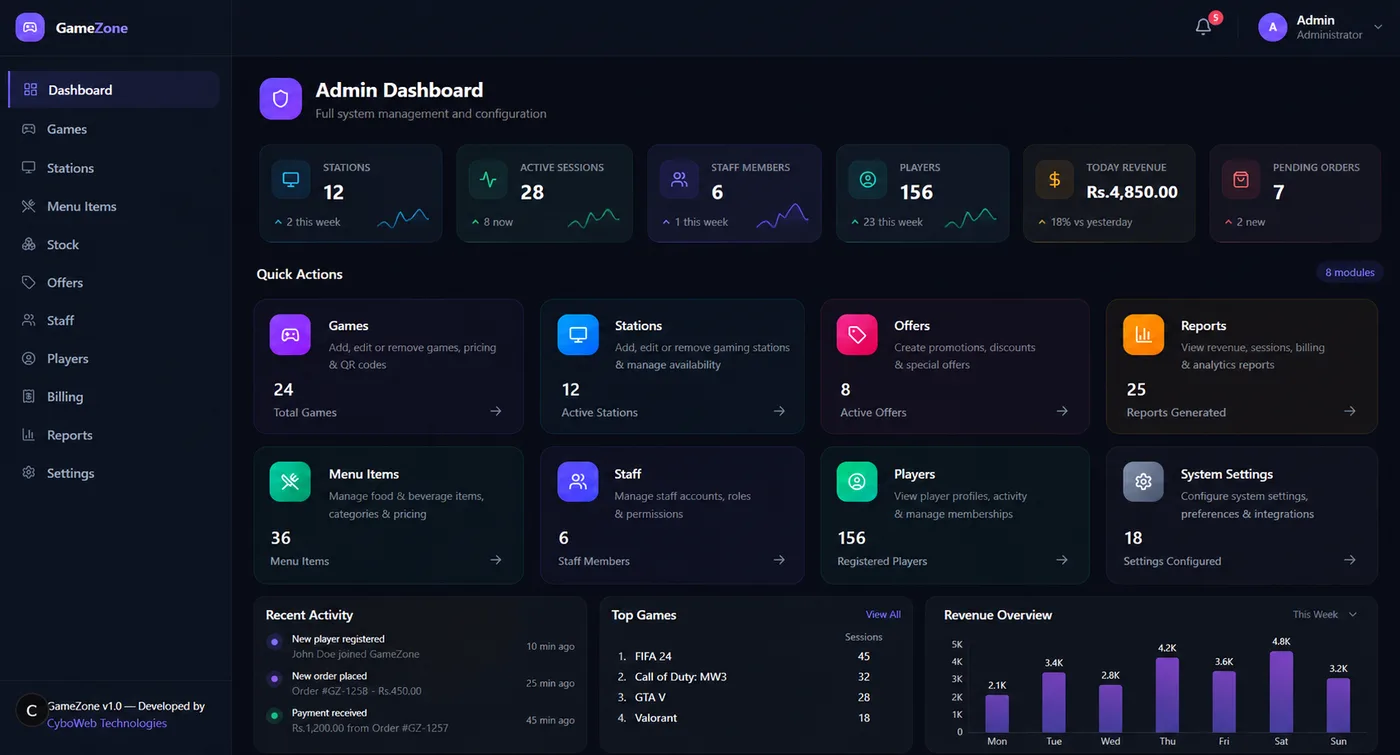
Game Zone puts entry, games, food and attendance on one system with one day-close.
Entry and ticketing
- Entry passes by duration, by session or as unlimited day passes, priced by weekday, weekend and holiday.
- QR or barcode tickets scanned at the gate, with re-entry handled properly.
- Live headcount — who is inside right now, against your capacity limit.
- Group and party bookings with advance payment and a scheduled slot.
- Walk-in registration capturing name and phone, which becomes the marketing list you never had.
- Age or height restrictions flagged at entry for rides and attractions that need them.
Prepaid cards and wallets
Customers top up a card or wallet once and spend across games and the café. It removes cash from the floor, speeds up every transaction, and gives you the two numbers that matter most: how much was loaded and how much is still unspent — which is real deferred revenue sitting on your balance sheet.
- Top-up with bonus tiers, and promotional credit tracked separately from paid credit.
- Balance visible to the customer, and refundable or expiring by your own policy.
- Lost card blocking with the balance transferred to a replacement.
Game and station tracking
- Every machine and station registered, with its own pricing per play or per minute.
- Session timing for consoles, VR rigs, pool tables and simulators, with alerts as time runs out.
- Revenue per machine, so you can see which units pay for their floor space and which should be replaced.
- Downtime logged when a machine is out of service, so its earnings are judged on the hours it was actually available.
- Tokens, credits or direct card debit, whichever model you run.
- Reward tickets or points issued from games and redeemed at the prize counter, with stock tracked.
Food and beverage
- Café and snack counter billing on the same system and the same customer wallet.
- Menu with categories, combos and modifiers.
- Kitchen order tickets printed or displayed, with order status tracked to the counter.
- Inventory linked to sales, so stock depletes as items are sold and low stock is flagged before you run out on a Saturday.
- Wastage and complimentary items recorded with a reason and an authorising user.
- Tax-compliant invoicing with GST breakdown.
Attendance
- Staff attendance by biometric or PIN, with shift rosters, late marks, overtime and a monthly summary that feeds payroll.
- Role-based counter logins, so every sale, discount and void is attributable to a person.
- Visitor attendance — footfall by hour, day and season, which is what tells you when to staff up and when to run an offer.
- Membership attendance for regulars on a subscription, with visit counts against their plan.
Reporting and day close
A single day-close that reconciles cash, card, wallet and online collections against tickets sold, games played and food billed — with the variance shown rather than hidden. Beyond that: revenue by stream, peak-hour analysis, machine performance ranking, staff-wise sales, wallet liability outstanding, and month-on-month comparison. Everything exports to Excel.
What you get
- One system for entry, games, café and attendance, with one reconciliation.
- Hardware integration — scanners, thermal printers, cash drawers, biometric devices.
- Role-based access so the floor staff see only what they need.
- Staff training and support through your first busy weekend.
- Reports built around the decisions you actually make: pricing, staffing and which machines to keep.
If the cash drawer and the ticket count disagree at midnight, the problem is not the counting. It is that entry, games and food were never on one system.