
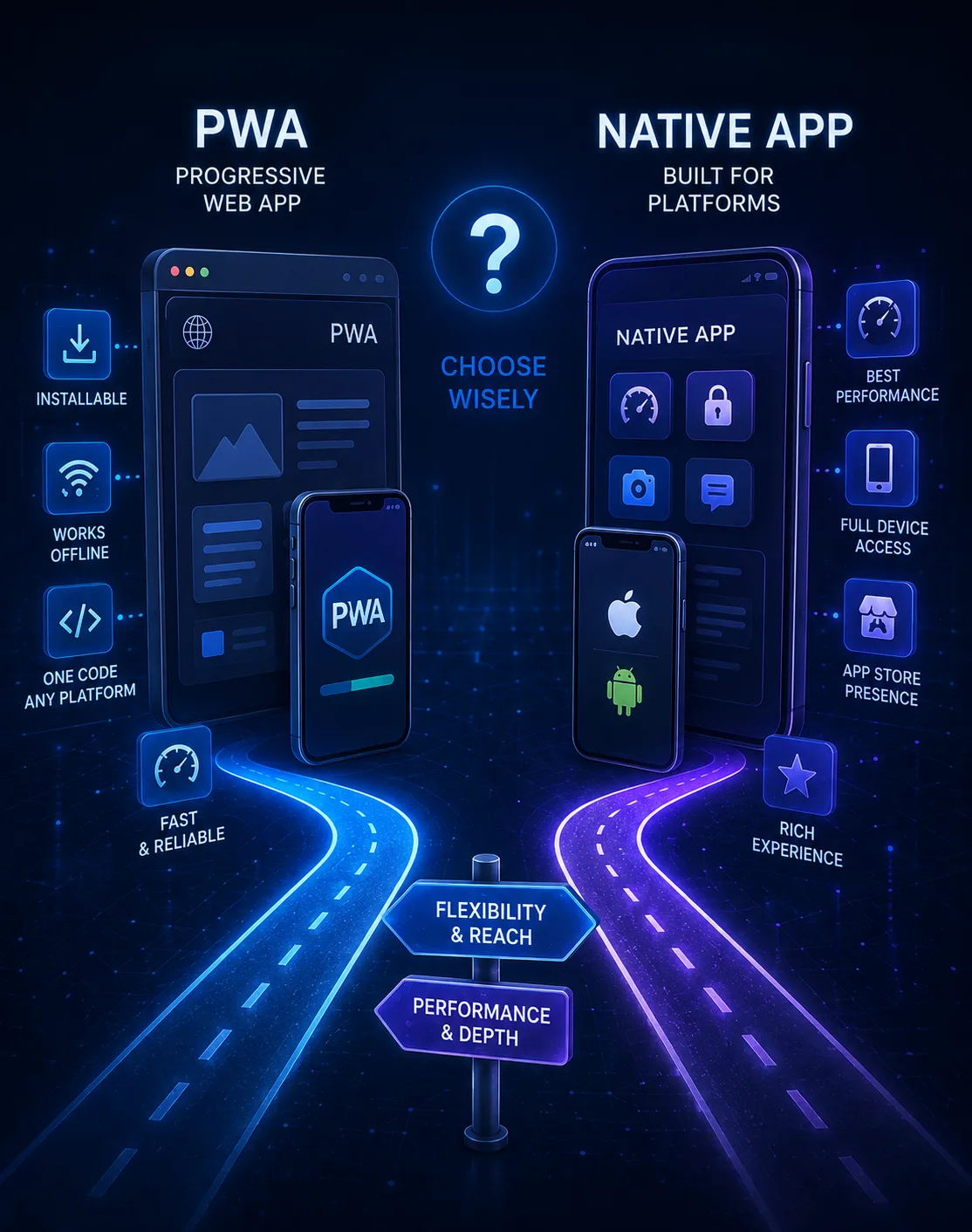
A progressive web app runs in the browser but can be installed, works offline and sends notifications. For many products this is enough. For some it is not, and the difference is worth understanding before committing a budget.
Where a PWA is the better choice
- One codebase serving desktop and mobile
- No app store review delaying releases
- Content and commerce experiences discoverable through search
- Lower build and maintenance cost
Where native still wins
Native remains ahead for sustained background work, deep hardware access, demanding graphics and platform integrations such as widgets or health data. If your core feature depends on one of these, a PWA will frustrate you.
App store presence also matters commercially. Some audiences simply expect to find you there, and store search is a real acquisition channel.
The honest middle ground
Many businesses ship a PWA first to validate demand, then build native for the specific journeys that justify it. This sequencing keeps early costs low without closing the door.
What to measure before deciding
- What proportion of your traffic is already mobile web?
- Does any core feature require background execution or hardware access?
- Is app store discovery a meaningful channel for your market?
- Can you sustain two codebases after launch?
Choose native when a specific capability demands it, not because an app feels more serious than a website.
Where to start
List your five most important user journeys and mark which genuinely require native capability. If none do, start with a PWA.