
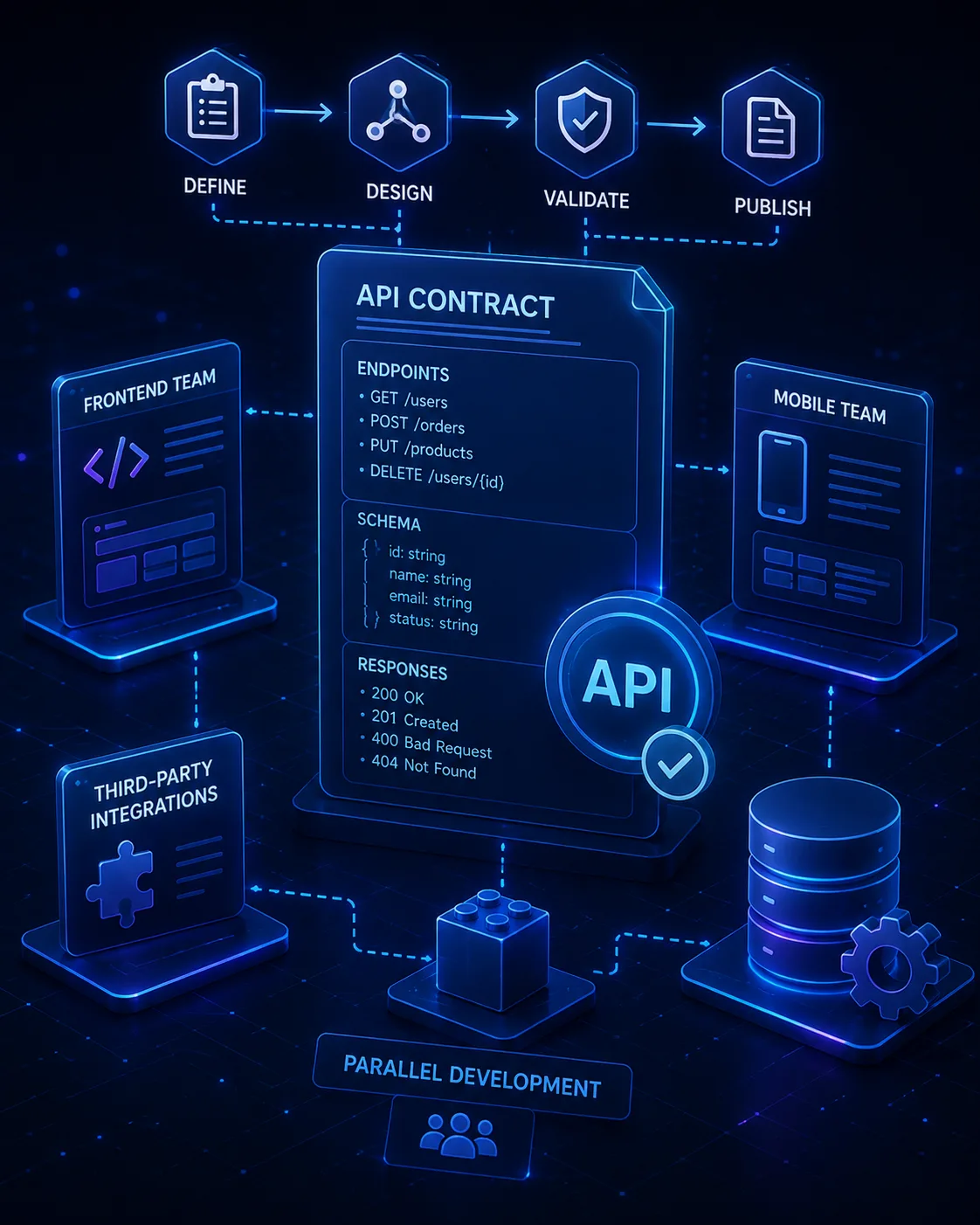
API-first means agreeing the interface before writing the implementation. The contract becomes the specification that front end, back end and integration partners all build against, rather than something documented after the fact.
Why the order matters
When the API is designed last, it mirrors the database rather than the use case. Clients end up making several calls to assemble one screen, and every new consumer needs another endpoint.
- Front-end and back-end work can start on the same day
- Mock servers unblock client work before the back end exists
- Breaking changes become visible in review, not in production
- Partners can integrate against a stable published contract
Writing a contract worth following
Use OpenAPI, keep it in version control alongside the code, and treat changes to it as changes to the product. Name resources consistently, use predictable pagination, and return errors in one documented shape.
Versioning without pain
Add fields freely; never repurpose or remove them silently. When a breaking change is genuinely required, version the endpoint and run both until consumers have migrated. Publish a deprecation date and honour it.
Testing the contract
Contract tests catch drift between specification and implementation. Run them in CI so a change that breaks a documented promise fails the build rather than a customer integration.
An API is a published promise. Once someone depends on it, changing it quietly costs far more than designing it carefully.
Where to start
Write the OpenAPI document for one endpoint, generate a mock, and build a real screen against it. The gaps in your thinking will surface immediately.